Hoboken Grace · Dinner Groups
The PAPA Prayer
by Larry Crabb
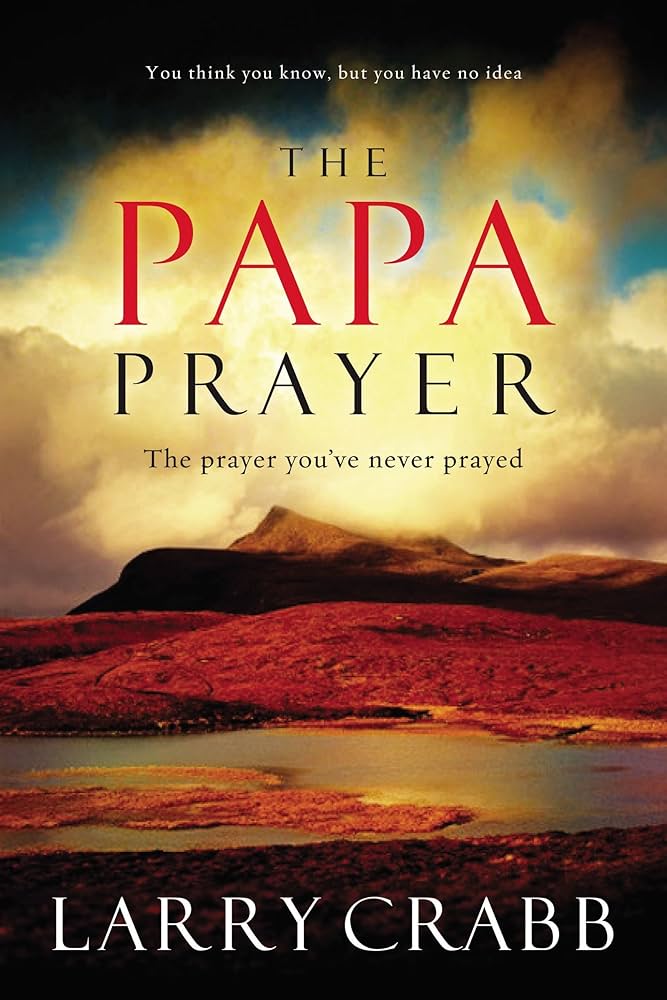
Most of us learned to pray by asking God for things. This book asks a different question: What if prayer was more about knowing God than getting things from Him?
Larry Crabb doesn't throw out petition. He just puts it in its right place. Relate to God first, then request. Enjoy Him first, then enjoy what He provides. The order matters. And when the order is right, prayer stops feeling like a monologue aimed at the ceiling.
Get the BookThe PAPA Framework
PAPA is an acronym for four movements in relational prayer. It's not a formula or a technique. It's a way to relate to God that puts the relationship before the request.
Be real. No pretense, no religious language, no spinning. Tell God what's actually going on inside you. Crabb calls this standing in your "red dot," the honest "you are here" marker on the map of your life.
Who do you actually picture when you pray? A vending machine? A frowning father? A distant force? This step compares your functional image of God with who He's revealed Himself to be.
Not a guilt trip. An honest inventory. What do you want more than God right now? What are you turning to instead of Him? You can't fix it, but you can name it. That's the starting point.
Come to God as your greatest treasure. Everything else, your marriage, health, career, even your kids' salvation, is a "second thing." Legitimate in its place. An idol if it climbs higher.
Key Concepts You'll Encounter
These ideas come up throughout the book. Knowing them ahead of time will help you lead conversations when your group lands on them.
Borrowed from C.S. Lewis. Knowing God is the first thing. Everything else (healing, provision, restored relationships, answers) is a second thing. When second things take first place, they become idols. When first things stay first, second things find their proper place.
Crabb says most Christians pray like kids on Santa's lap. Recite the list, hop off. No interest in knowing the person hearing the request. Petitioning without relationship turns legitimate desires into entitled demands. Dreams become demands.
Like the "You Are Here" dot on a mall map. You can't get anywhere if you don't know where you are. Presenting yourself to God starts with standing in your red dot. Not the cleaned-up version of yourself. The real one.
The biblical anchor for the whole framework. "Remain in me" comes before "ask what you will." Relational prayer is the mechanism for abiding. This is where PAPA connects to Scripture most directly.
Crabb is emphatic about this. PAPA is not a technique to manipulate God. He pushes hard against "thing-ism," the habit of packaging every idea into the next big thing with inflated promises. This is a way to relate, not a system to follow.
What the Book Covers
The book has 20 chapters in two parts, plus practical appendices at the end. Part 1 builds the case for why relational prayer matters. Part 2 walks through each PAPA movement in depth.
Builds the case for why relational prayer must come before petitionary prayer. Confronts the frustration of unanswered prayer. Introduces the framework. Roots it in John 15.
- Ch 1 Your Dream of the Perfect Papa Can Come True
- Ch 2 Introducing the PAPA Prayer
- Ch 3 Prayer Used to Be Dull, but Not Now
- Ch 4 Get God Before Praying to Get Things from God
- Ch 5 The Prayer of a Spoiled Child
- Ch 6 Relational Prayer Is About God and Me
- Ch 7 This Is No Gimmick — It's a Way to Relate
- Ch 8 Stay at Home with Christ
- Ch 9 How I'm Learning to Pray
- Ch 10 A New Paradigm for Prayer
Two chapters per PAPA movement. This is where the book gets practical. Crabb walks through each step with personal stories, reflection, and guided prayer.
- Ch 11 It's Time to Learn the PAPA Prayer
- Ch 12 Stop Trying to Be Who You Think You Should Be Present
- Ch 13 Enter Your Red Dot — Don't Just Describe It Present
- Ch 14 Who Do You Think You're Talking To? Attend
- Ch 15 Who Has God Shown Himself to Be? Attend
- Ch 16 Who Do You Turn to When You're Scared? Purge
- Ch 17 Abandon Yourself to Holiness Purge
- Ch 18 You Will Hear God's Voice Approach
- Ch 19 Become Someone God Can Really Enjoy Approach
- Ch 20 The PAPA Prayer: It's a Way of Life
A four-day guided plan (one day per PAPA element with Scripture and reflection), a special word to women, a special word to men, and a final word on making PAPA a daily rhythm.
Get the Book5-Week Reading Plan
Here's how the book maps to the five weeks of the study. The reading is about 35 pages per week, which takes most people around 40 minutes.
- Ch 1 — Your Dream of the Perfect Papa Can Come True
- Ch 2 — Introducing the PAPA Prayer
- Ch 3 — Prayer Used to Be Dull, but Not Now
- Ch 4 — Get God Before Praying to Get Things from God
Most of us treat prayer like a request line, and it's not working. This week introduces the PAPA framework and the idea that relating to God should come before requesting from God.
- Ch 5 — The Prayer of a Spoiled Child
- Ch 6 — Relational Prayer Is About God and Me
- Ch 7 — This Is No Gimmick — It’s a Way to Relate
- Ch 8 — Stay at Home with Christ
- Ch 9 — How I’m Learning to Pray
- Ch 10 — A New Paradigm for Prayer
Petitioning without relationship turns prayer into a transaction. Crabb confronts this honestly, roots the framework in John 15, and shares his own journey of learning to pray differently.
- Ch 11 — It’s Time to Learn the PAPA Prayer
- Ch 12 — Stop Trying to Be Who You Think You Should Be
- Ch 13 — Enter Your Red Dot — Don’t Just Describe It
- Ch 14 — Who Do You Think You’re Talking To?
- Ch 15 — Who Has God Shown Himself to Be?
Show up honestly (your "red dot"), then look honestly at who you think you're talking to. This is where the book gets personal.
- Ch 16 — Who Do You Turn to When You’re Scared?
- Ch 17 — Abandon Yourself to Holiness
- Ch 18 — You Will Hear God’s Voice
- Ch 19 — Become Someone God Can Really Enjoy
- Ch 20 — The PAPA Prayer: It’s a Way of Life
Name what you want more than God. Then come to Him as your greatest treasure. Crabb's 3am wrestling-with-God story in Chapter 20 is the emotional peak of the book.
PAPA as a lifestyle, not a one-time exercise. The four-day plan gives your group a concrete way to practice one PAPA movement per day, with Scripture and guided reflection.
How This Connects to Sundays
The book study runs alongside the weekend series "Is Anyone There?" but discussion questions for your group are based on the book, not the weekend message. The series and the book are tackling the same big question (what does honest prayer actually look like?) from different angles. The weekend messages give the broad vision. The book gives the depth.
Your group doesn't need to track the sermon week by week. The book stands on its own. But you'll notice overlap, and that's by design. People will hear something on Sunday and recognize it in the reading. That reinforcement is the point.
Get the BookGet the Book
The book is available in several formats. The Spotify audiobook is free. Physical copies will also be available at Hoboken Grace on Sundays.
Physical copies will be available at Hoboken Grace on Sundays too. The Spotify audiobook lists episodes by chapter title rather than number — the chapter breakdown above can help you find where you are.